
Dryer takes two cycles to dry? Your vent is clogged (clean it yourself)
A dryer that needs two cycles to dry one load almost always has a vent packed with lint. The dryer makes heat fine, but the wet air has nowhere to go, so the clothes just sit in a warm damp box. Clean the full vent run with a brush kit chucked into a drill. About an hour, forty bucks for the kit, and you own it for next time.
- Cordless drill the brush chucks into it
- A vacuum shop or household, ready before you pull the brush
The dryer started needing two cycles to get a normal load dry, which is the kind of thing you tolerate for way too long before you deal with it. It runs, it gets hot, the clothes come out warm and still damp, so you run it again and burn another 45 minutes and a second helping of electricity. Same laundry room where the washer tried to walk off, for the record. That room and I have had a season.
The dryer was not broken. It was suffocating.
Why two cycles means the vent
A dryer works by heating air, pulling the moisture out of your clothes, and blowing that wet air out through the vent to the outside. The lint trap catches most of the fuzz, but not all of it, and over years the rest builds up in the duct behind the machine and the run to the outside wall. Once that duct is packed, the wet air has nowhere to go. The dryer keeps making heat, but the moisture just recirculates, and your clothes sit in a warm damp box. Two cycles. Sometimes three.
The signs, so you can be sure: the load is still damp after a full cycle, the dryer and the clothes feel hotter than usual, and the little flap on the outside vent barely moves when the dryer is running.
Cleaning it
- Unplug the dryer, or shut the gas off if it is gas, and pull it out from the wall. Disconnect the flexible duct from the back.
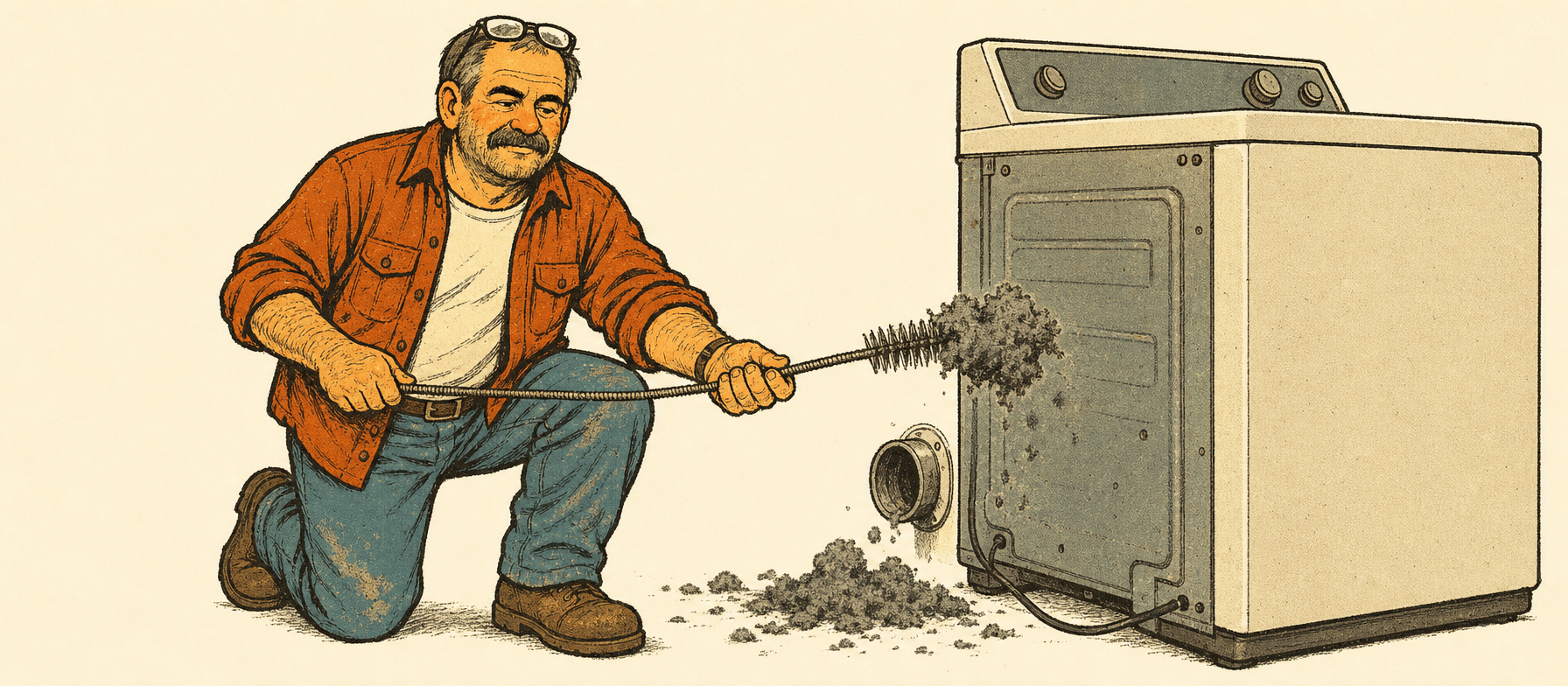
- The kit is a set of flexible rods with a brush on the end that screw together and chuck into a drill. Run the brush into the duct, spin the drill slowly, and push it through the whole run to the outside wall. Add rods as you go.
- Have a vacuum ready. What comes back is a gray felt blanket of lint that will genuinely alarm you. Mine filled a grocery bag. From a vent I thought was fine.
- Go outside and brush out the last few feet from the exterior vent too, and make sure the flap moves freely.
- Reconnect the duct, push the dryer back, and run a load. Mine dried in one cycle for the first time in a year.
The reach thing, and the fire thing
Two honest notes. The kit I bought reaches twelve feet out of the box, which covers a normal run. If your dryer vents up through an attic or across a long crawlspace, measure it, because a longer run needs the add-on extension rods or you will come up short in the middle of the duct, which is a bad place to come up short.
And the part nobody likes to say out loud: a packed dryer vent is not just an efficiency problem, it is the single most common cause of dryer fires. All that lint is kindling sitting against a heat source. So this is one of those jobs where the forty dollars and the hour buy you more than faster laundry. Do it once a year.
What went wrong
I did not have the vacuum positioned when I pulled the first brush-load out, and a grocery bag's worth of lint went onto the floor, some of it onto me, and Biscuit decided the lint was alive and needed to be barked at. The quarter is for the word I said with a face full of lint. Have the vacuum ready before you pull the brush, not after.
The Damage
| Item | Where | Cost |
|---|---|---|
| Gardus LintEater rotary dryer vent cleaning kit (RLE202) | Home Depot | $38.97 |
| Sales tax | $2.34 | |
| Total | $41.31 |
Deb's verdict. "One cycle. I did not know it could do one cycle."